AR Won't Begin with the Everyday
.
Written by zeepada | Edited by @syntaxional
The AR demos from headset makers always end the same way. Someone on a living-room couch, sweeping virtual windows through the air with a flick of the hand. Smart glasses prototypes make the same promise. Always-on AR. That's pretty much been the pitch for the last few years.
But look at the AR devices people are actually paying for, and the picture is different.
1. AR shows up at the pool and on the slopes

The Smart Swim 2 Pro, made by the Canadian company Form, is a swim goggle. A small AR display sits in one corner of the lens, projecting distance, pace, heart rate, and stroke rate in real time. An optical sensor at the temple reads your heart rate underwater, and every time you push off the wall your last lap's split flashes onscreen before fading back into the cumulative data.
A single charge lasts 14 hours. The lenses are Corning Gorilla Glass 3, blocking 98% of UV. You can preset five dashboards and switch between them with a button press — one for interval work, one for technique, one for heart-rate sessions — depending on the day.
The real story, though, sits on top of the hardware: software and a subscription. Basic tracking is free, but a $99/year Premium plan unlocks 1,500+ guided workouts, HeadCoach (which analyzes head angle and body position), Script Workout Builder (snap a photo of a workout written on paper, and it appears on your goggles), and SwimStraight, a digital compass for open water.
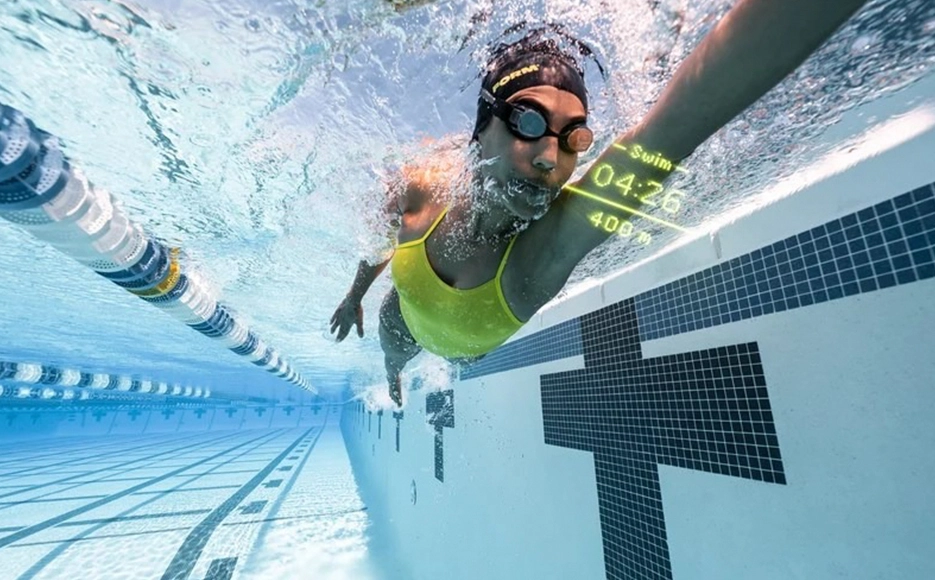
It also plugs into coaching platforms like TrainingPeaks and TriDot, so a coach states away can push a workout straight to your lens. Form's own data claims swimmers following Premium structured workouts improve 1.4× faster than those who don't. Less a measurement device, more a coach embedded in your goggles.
And this isn't a novelty. The first generation launched in 2019 and won a Red Dot Product Design Award. Late last year it landed on Apple Store shelves. Pro triathletes like Richard Murray use it as daily training gear, and among serious swimmers it's becoming something like a Garmin watch — a standard tool.
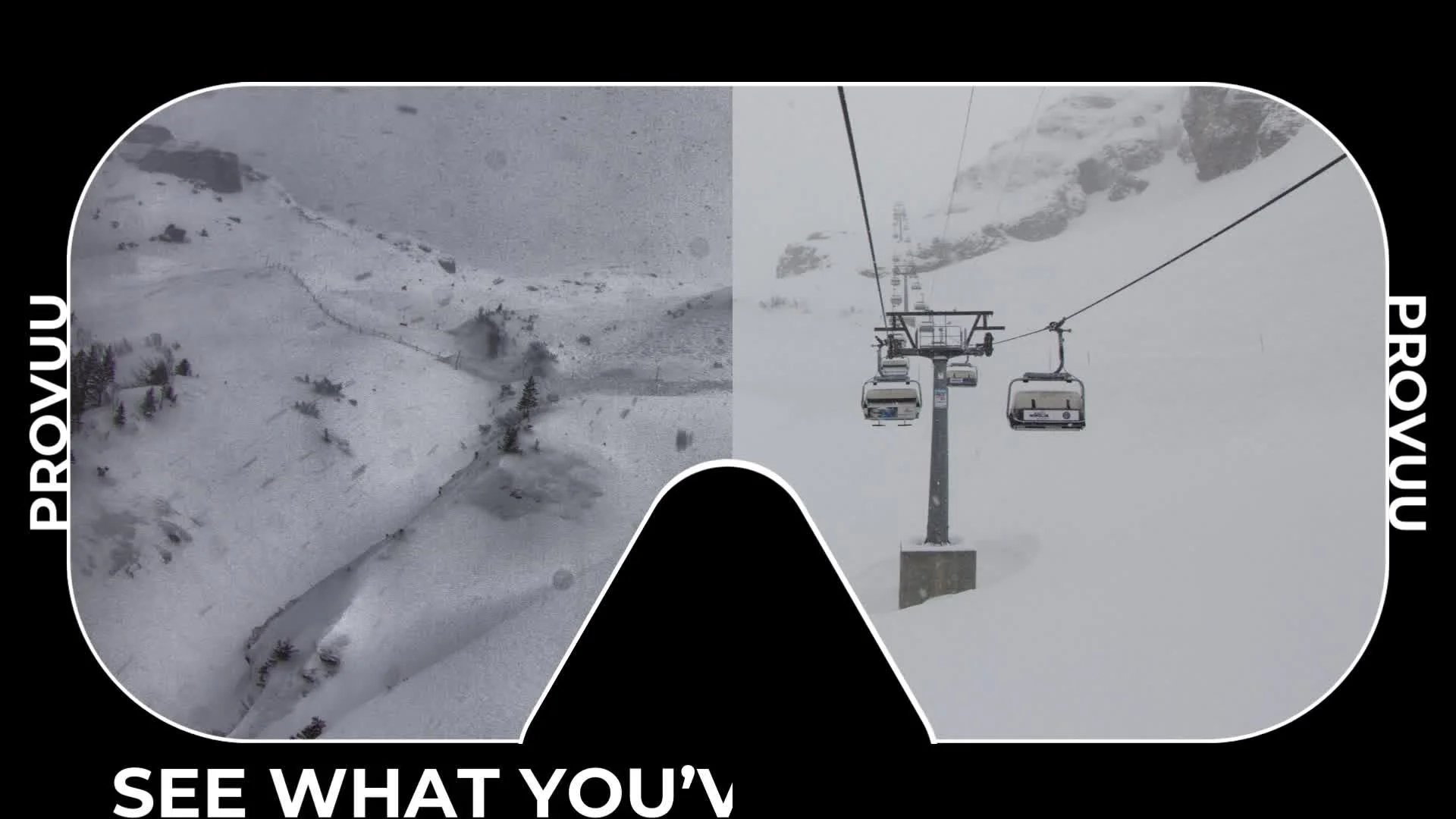
The same idea is creeping into skiing. Provuu, a Swiss startup, is putting AR into ski goggles to highlight slope contours in low-visibility conditions — whiteouts, deep shadow. It's still at the Kickstarter stage, but it's a small signal that the same pattern is spreading.
2. AR shows up in the delivery van
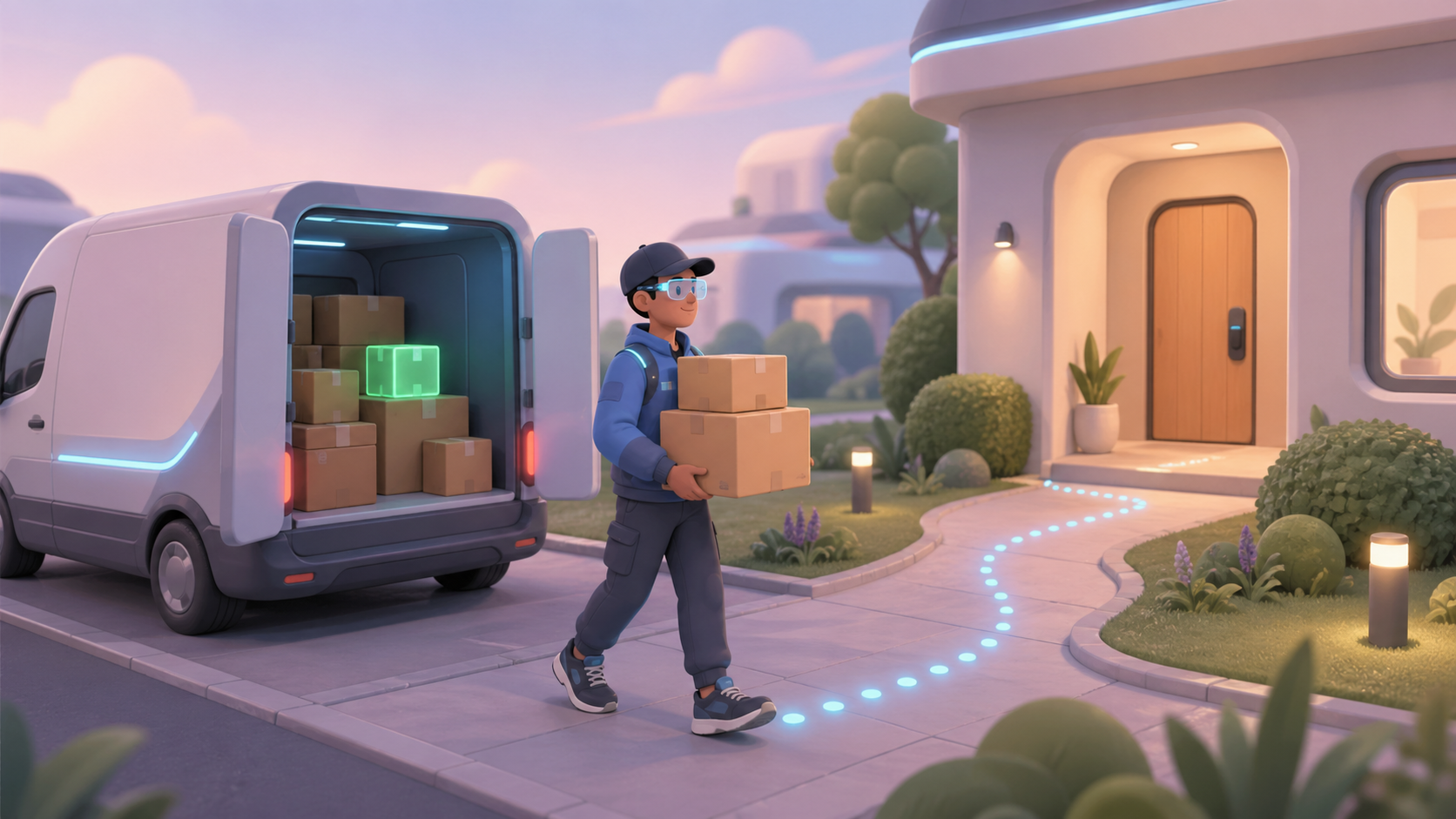
Amazon unveiled smart glasses last fall in the same spirit. Internally code-named Amelia, the device is built strictly for delivery associates. It doesn't work while you're driving. The moment you park, the glasses turn on, and the boxes for your next stop are highlighted on a green monochrome display inside the cargo bay.
Pick up a box and it scans automatically; a checklist at the edge of your view updates. As you walk with boxes in both hands, a digital path is laid over the sidewalk. When you reach the door, snapping a delivery photo wraps things up.
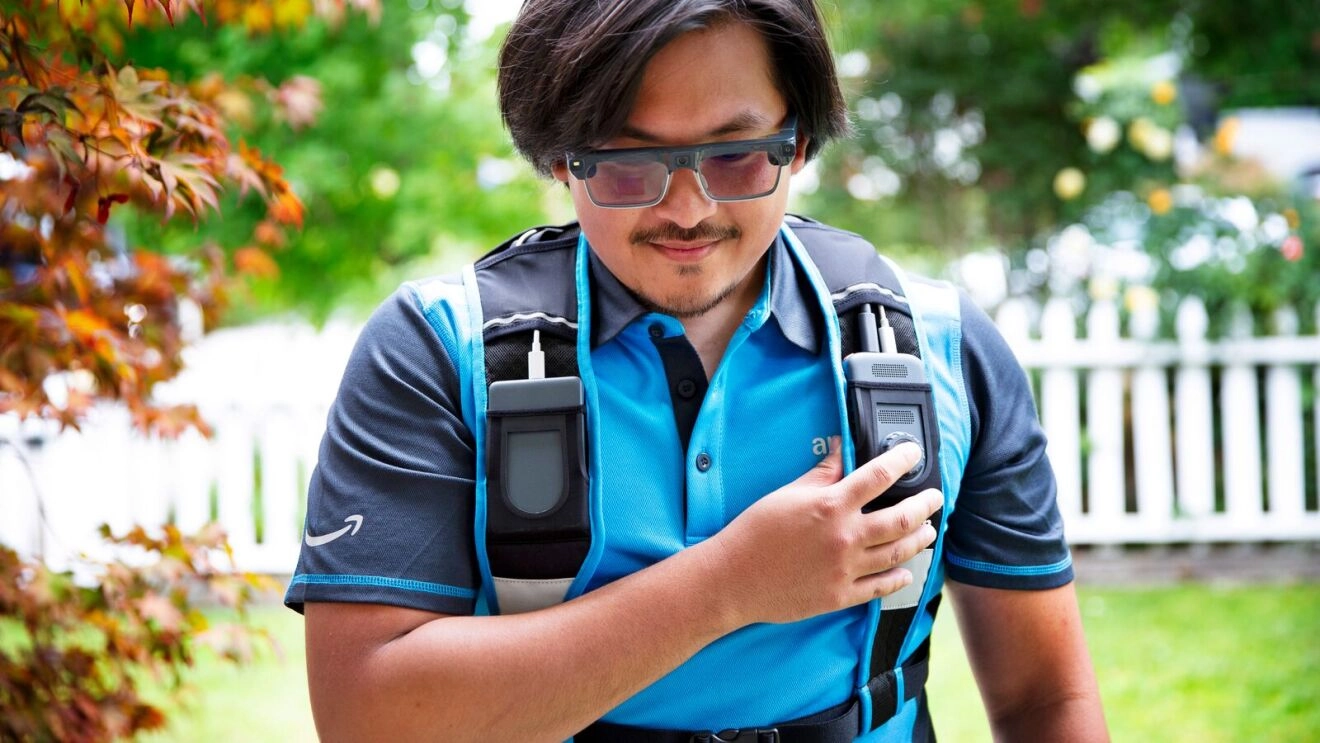
A driver in Omaha who tested it said having the information inside his field of view felt safer — he didn't have to keep glancing between his phone, the box, and his surroundings. He could keep his eyes ahead while working. Reports suggest Amazon is weighing shipments of more than 100,000 units next year, which would be the largest single order for MicroLED displays on record.
Nothing about the device is flashy. A green monochrome display. A goal of shaving a few seconds off each delivery. A narrow operating window that shuts off entirely when you're behind the wheel. It's a tool fitted to those exact seconds when your hands are full of boxes and pulling out a phone isn't an option.
3. What the working products share

None of these devices look like the AR we usually expect — floating 3D objects, app windows hanging in space. But they share three things.
First, hands-free moments. A swimmer doing backstroke has hands carving through water and eyes locked on the ceiling. A wristwatch is invisible. So is the line at the end of the pool. A skier is gripping poles and can't fish out a phone in a whiteout. Same for a delivery driver shuffling two or three boxes down an apartment hallway. When your hands are busy, pulling information into your line of sight is exactly the gap AR fills.
Second, information existing wearables can't give you. Garmin, Apple Watch, Oura Ring — over the past decade, they've handed us nearly every number. Pace, heart rate, recovery score, VO2 max. The era of measurement is, in some sense, finished. What AR adds isn't a new number. It's spatial context: how far to the wall, whether you're swimming in a straight line, where the slope ahead breaks, which box goes to the next house. The kind of thing a wrist can't tell you.
Third, short bursts. An hour of swimming. Half a day of skiing. A few minutes per delivery. AR doesn't need to be always-on. The activity has clear start and end points, and the device only needs to wake up inside that window.
Put the three together and the picture is striking. AR didn't first land in living rooms, on streets, or in offices. It landed in narrow, specific moments — hands tied, existing wearables falling short, time short.
4. What's actually selling
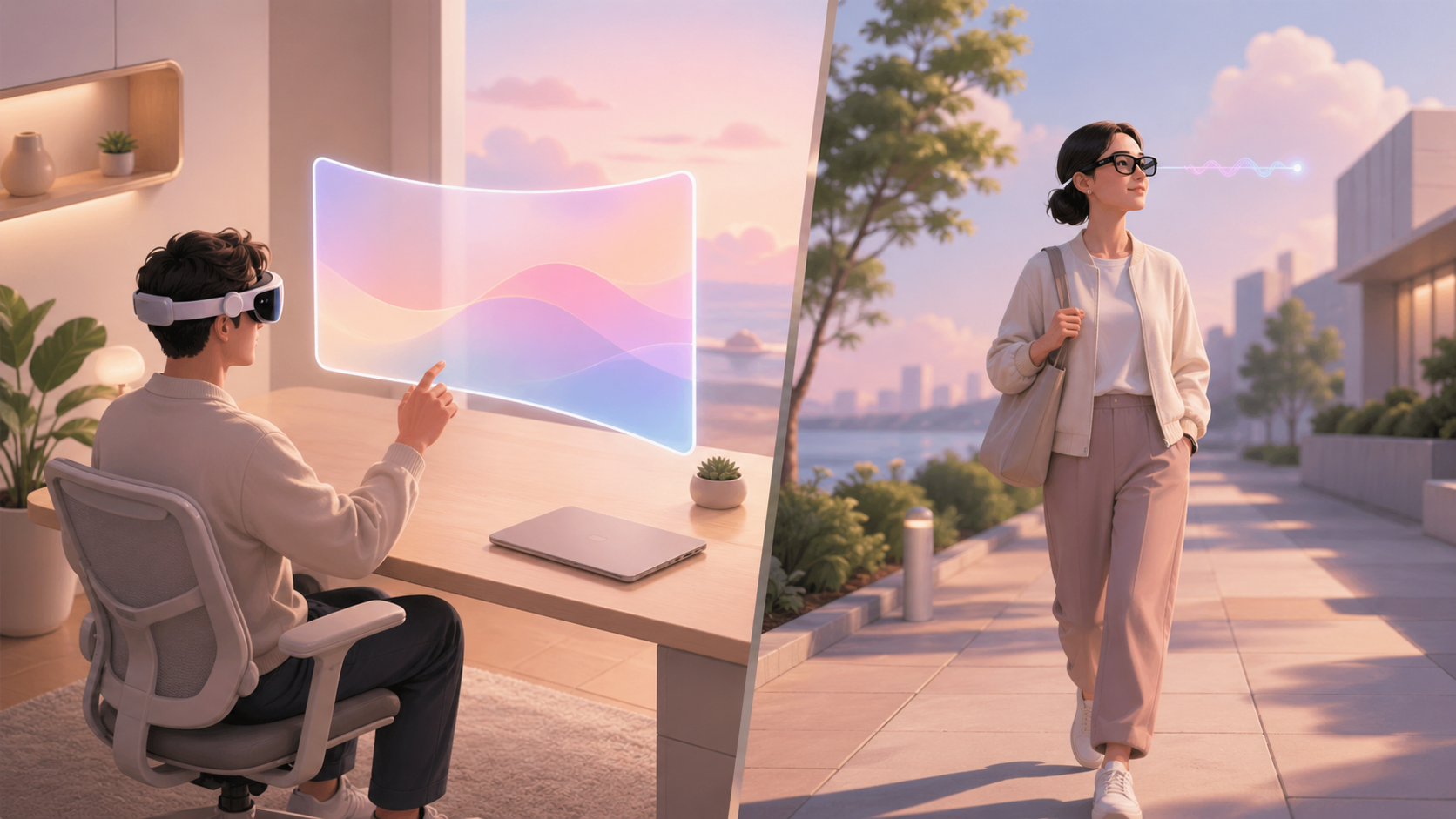
What's interesting is that the consumer glasses people are actually buying follow the same pattern. Ray-Ban Meta has found its footing — it even rolled out a prescription model this April — but there's no always-on AR display on it. It settled in as a narrow, specific tool: camera, audio, and an AI you summon when needed. Vision Pro users report the same thing. The most common use case people mention is wirelessly connecting a laptop and using it as a giant virtual monitor. Less a daily layer that follows you to work, more a giant computing environment you flip on at your desk.
The forms differ, the prices differ, the use cases differ — but from swim goggles to ski goggles to delivery glasses to Ray-Ban Meta to Vision Pro, the pattern is oddly consistent. Every one of them succeeded as a device for specific moments. The vision of an always-on layer running through all 16 waking hours, the one in those headset-maker demos, is the opposite of how people are actually using glasses today.
So is this narrow usage where AR ends up? That's another story.
5. Narrow first, then merged
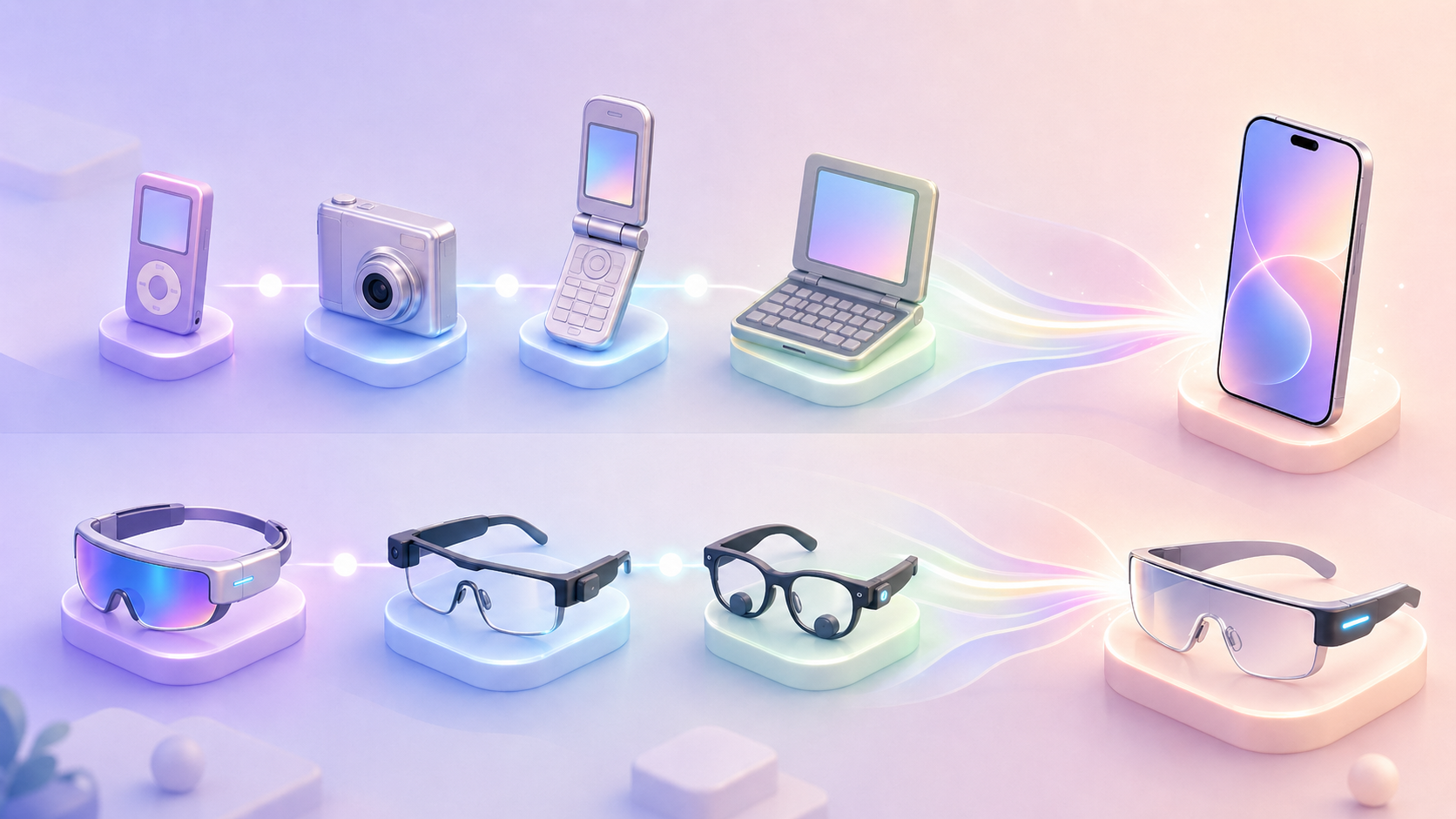
Where do AR glasses go from here? The short-term direction looks clear: tools that fit precisely into one sport, one job, one environment — narrow and sharp. That's the picture Form, Provuu, and Amazon are sketching, and the next wave of AR glasses is likely to follow the same shape for a while.
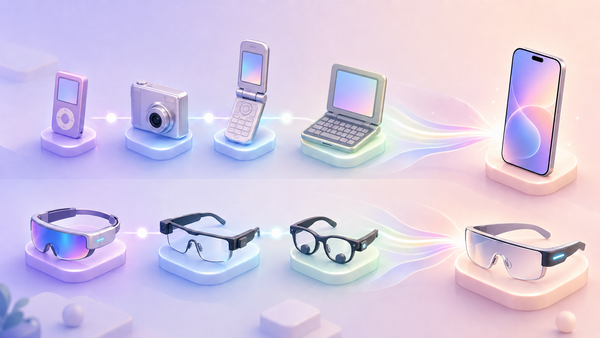
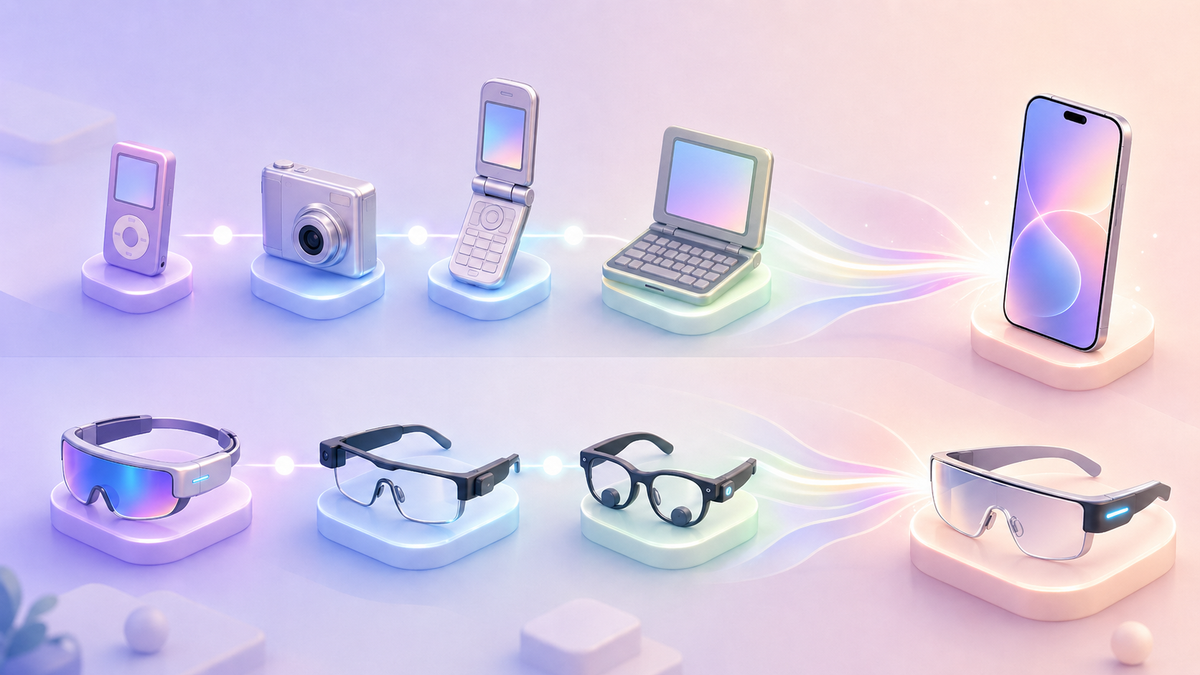
But this isn't the final form. Think about the smartphone. Before it arrived, we'd already grown used to a set of separate devices.
We listened to music on MP3 players. Looked up words on electronic dictionaries. Made calls on cell phones. Took photos on digital cameras. Each tool found its place in daily life first. Only after that did a single device combining them all feel natural. The smartphone didn't appear out of nowhere — it arrived once the separate tools were ready to be folded into one form factor.
AR glasses will probably take a similar path. People get comfortable with the form factor — at the pool, on the slopes, in the delivery truck. Each narrow use case proves itself out. And only then does the room open up for an all-in-one device that pulls them together. The always-on AR that Big Tech's headsets and glasses keep pointing to is the last stop on that route. Trying to jump straight there now is a little like trying to invent the smartphone before MP3 players and digital cameras went mainstream.
That swim goggles got to commercialization first is a small hint in itself.
AR didn't start in everyday life.
Everyday life might just be the last problem AR has to solve.